

Shut that Bitch Up*
When Imposter Syndrome meets Perfectionism

I. Introducing the Bitch
I’ve lived with various forms of The Bitch my whole life, but at one of the first writing retreats I facilitated, I was surprised to learn how many talented, creative women live with some version of The Bitch, too. There was the woman whose first novel had just won a contest and a publication contract. Another who writes gorgeous prose and had published in multiple places. Other women who were spending hours writing and had pages and pages to show for it, women who were sharing beautiful prose they’d written in response to generative prompts.
Yet, after a group reading on our final night, here’s what some of the women confided to me the next day.
I know I put everyone to sleep.
Listening to everyone else I realized I have no idea what I’m doing.
I’m not even sure I should be here.
Having worked with over 125 writers at retreats since that one, I now expect The Bitch to tag along, whether she shows up as imposter syndrome or perfectionism or some mixture of both.
Imposter syndrome is exactly what it sounds like: That sick-in-the-gut feeling that you’re not good enough, that you’re a fake, that you’re not entitled to be doing whatever it is you’re doing—writing in this case—all under girded with a feeling of dread that someone will blow your cover and expose you as a fraud for daring to a enter a space you don’t deserve to be in.
In the writing life, imposter syndrome can show up at every stage: the drafting, the sharing, the revising, at retreats. Even when we get a piece accepted, The Bitch still shouts out from the sidelines. (Speaking for a friend, here…)

Imposter syndrome is never helpful. At retreats or group events when writers share their work and have to make themselves vulnerable, it sometimes feels like a virus: one woman mentions she feels it, others begin to confess that they too suffer from it, and suddenly everyone’s infected.
Of course, it’s not contagion—The Bitch was already embedded. And once she’s been named, that’s the moment when the conversation turns to experiences we’ve had and how we’ve come to believe all the crappy beliefs The Bitch feeds us. At that point, the conversation has to move from writing and craft to process—how The Bitch manifests for each of us, and how we can reframe our thinking so that we can feel more confident with our work, and claim our space.
But as Leslie Jamison points out in her New Yorker article, Why Everyone Feels Like They are Faking it, too much focus on self-correction keeps us from also looking outward at the structural, societal forces that augment The Bitch’s power.
Jamison focuses on women in positions of power, but similar external factors dominate in writing spaces too. For example:
Anyone here older than 50 remember your high school English class reading list? How many women authors were included?
How about women writers, who until very recently, erased their first names and used only their initials when authoring books they wanted to be read not only by girls, but by boys too. (see: JK Rowling, SE Hinton)
Is there a category called men’s fiction? If not, why not? Does that mean the rest of fiction is by default, for men?
Despite multiple waves of feminism, women still internalize that we should be agreeable, self-effacing, and not take up too much space. These characteristics work in direct opposition to the confidence we need to express our voice and claim authority on the page.
For years, when women wrote about family, motherhood, relationships, caregiving, or the body, trauma, or sexual abuse, the message — explicit or not — was that these subjects were too small, too private and too personal to matter.
Over the last two decades we’ve seen a sea change, with memoirists like Mary Karr, Sue Williams Silverman and Melissa Febos publishing and receiving critical acclaim for their deeply personal stories. But for those of us who came of age before the 1990s, this canon did not exist. We built our inner critics long before that shift arrived.
In other words, The Bitch got there first.
As Jamison says, the “damage from these eternal forces often becomes part of the internal weave of self.”
So how do we unweave The Bitch from our internal fabric?
In other words, how do we shut The Bitch up?
Sometimes, you just have to meet her head on.
II. Meeting The Bitch Head On
About a year ago, I attended a high-end writing retreat near the French Pyrenees, the kind of retreat that was pilloried in this article in Slate. As someone who works her ass off to run really good writing retreats, I thought this author had a shallow and lazy take on the subject matter, as he didn’t actually attend a retreat, he mostly stereotyped them from afar as high-end vacations for older, rich, white women who were pretending to write.
Anyway…
I selected this retreat because I was now running/facilitating six retreats a year and figured it would be good for me to sit on the other side of the “table,” experience what my participants do when they fork out money and place their trust in me. This retreat happened to be just across the border from my home in San Sebastian, Spain, and for years I’d been hearing great things about the co-leaders, Dinty Moore and Allison Williams, from writers who attended my retreats. At the very least, I knew I’d get a solid week to focus on my own writing, see a bit of France without having to fake speaking French, and eat a lot of delicious French cheese.
The week far exceeded my expectations. Every morning Allison and Dinty sat themselves at the head of a U-shaped table in an art studio at the retreat center and provided detailed, specific talks on topics such as openings, endings, story structure and more. While I had worked on these topics already, one of the hard truth about being a writer—an artist of any kind, I imagine—is that our learning is never done. To keep our art fresh and lively, we’ve got to continually expose ourselves to new ideas and perspectives.

But then, they did something that terrified the Bejesus out of perfectionist me, rousing The Bitch from a light slumber.
“Send us your pages” Allison called out with a smile, “and we’ll live edit them for everyone right now.” She opened a Zoom room, and we then watched as she proceeded to eviscerate destroy slash through live edit someone’s precious art baby work in front of the group.
For a red penner such as myself I can think of few things more terrifying. Despite years of trying to manage how I receive critical feedback, I still break out in a sweat when I send a piece to a friend for comments. When it comes back with edits and suggestions, my back tightens up and every recommended change feels like a stab in my ribs. By the third page of comments, I’m convinced my work is absolute shit and that I should junk it while I still have my pride intact.
I know this is not universal. And that it’s a bodily experience for me because of my relationship to writing and editing. And that it’s something I will have to work on my whole life. Part and parcel of life under the red pen.
Nonetheless, given how hard it is for me to be edited in private, the thought of having two well-respected writers scroll through my draft and critique it with 16 strangers watching was enough to make me want to hop the next train straight back to San Sebastian.
Submitting your work for live editing was voluntary, and not surprisingly, like many of us with unhelpful loud and inner bitches, my first idea was to send something that I knew was good. Something they couldn’t do much damage to. That would settle The Bitch down.
But as the week wore on and I had a chance to work with Allison one-on-one on an essay and see her mad editing skills in the live edit session, I started to rethink.
Was I there at the retreat to show off? Or rather, did I shell out those extra bucks and make the time to go because I wanted to learn? And challenge myself.
And what bigger challenge could I face than to submit the project I had struggled the most with and loved the most (the idea, not the writing): a 3,000-word opening to a novel I had worked on for three years. The same book I’ve written about in this newsletter with the two unhelpful writing coaches who were good at telling me what was wrong but not so skilled at helping me build the book in a way that respected my vision.
It was time to discard Perfectionist Bitch, terrified of getting things wrong, and Imposter Syndrome Bitch, who too often asks me what the F*&K do I think I’m doing, writing a novel.
I took a deep breath, found my chapter, and hit send.
Okay, Bitches, I thought. You are not welcome here. Go play in the unmowed French grass and eat some foie gras or whatever.
Allison pulled up my submission on screen and asked, “What do you need help with?”
”It’s a novel, and I’m struggling with the opening chapter,” I replied. “I’ve tried 25 different versions and I can’t figure out where it starts.”
“Great,” she replied. “Here we go.” And in she went, the cursor skimming each line as she read aloud and Dinty weighed in.
Him first: “I don’t understand this at all. This sentence makes no sense. Why is he on the ground? Is the motorcycle on top of him?”
Allison agreed. “Right, we don’t know what’s happening here. Oh, and by the way is this narrator a dude or a woman? Where are we? Cut, cut, who cares about this, delete delete. I think there’s something in here, but we’re not there yet, soooo much we don’t need here, this makes no sense, do you understand this, Dinty, no I don’t think I do, okay let’s keep going, there is literally no action here.”
Bitch was outside, the door was closed, but my upper body was locked into one large knot because by now we were halfway through the chapter and apparently I’d written ten pages of throat clearing—no tension, no forward motion. They went on a few more paragraphs like this, and just as I felt my body about to lock into place permanently, Allison started piecing the various bits together: “Okay, we have a secret about a motorcycle. We have an accident. We have a doctor and a hospital. Aha! Here it is. The ER doctor is his wife. He’s done something he promised her he wouldn’t. And now he’s had an accident because of it and she’s caught him.”
She looked up smiling. “This is your opening. Get us here faster.”
She continued down two more paragraphs with further suggestions and then that was it. It was over. All that fear and sweating to answer a question I’d been mud wrestling for six months. Done. I had a new starting point.
I left that retreat happy, not only because I’d found a new starting point, but because it was another moment of growth. I forced myself to share a draft that wasn’t working and let 16 people watch someone critique it. Instead of feeding The Bitch, who is addicted to accolades, I’d starved her and fed the anti-Bitch, the part of me that needs to put my work up for feedback, thicken my skin, and – this is important – separate critique of my work from a critique of self.
III. Why We Need to Shut the Bitch Up.
If you live with The Bitch, you know how much she holds you back. You know you don’t want The Bitch in the room with you when you are writing. The Bitch of imposter syndrome who tells you you don’t belong, and The Bitch of perfectionism who tells you you can’t be anything but perfect, and that if you are not perfect, you are no one.
Ugh. That should be enough, but here’s a few more reasons why we need to shut The Bitch up:
The Bitch thwarts our creativity, holding us back from getting words on the page. How can you write anything if she’s telling you it’s all crud?
The Bitch doesn’t allow us to write sloppily. On the rare occasion she allows unfiltered writing to emerge, she immediately orders us to excise our ramblings before we’ve had a good look at them and been able to notice that often our truest emotional work lives among those words.
The Bitch keeps us terrified of making mistakes. That can flatten our work.
The Bitch’s need to be right/perfect/flawless keeps us from hearing feedback. When we can’t absorb feedback, we don’t grow as writers.
When the Bitch doesn’t let us fail, we revert to what’s safe and get stuck in a rut.
The Bitch does not like taking risks. Risks mean mistakes. But without risk, there’s no growth.

IV. How do we Shut That Bitch Up?
On a personal level, sometimes, it’s as easy as just closing your eyes and telling her to shut up. You know she’s not helpful. Tell it to her, and yourself.
You can also remind her that perfectionist Bitch will get to hang out with you later when it’s time to line edit and submit. Even if she’s not welcome now.
Work with other writers who are supportive. Find an accountability partner who will keep you writing, tell you everything you’re doing well, and commend you on having finished your pages for the week.
Train yourself to think of yourself as a writer. That you belong. Claim your space.
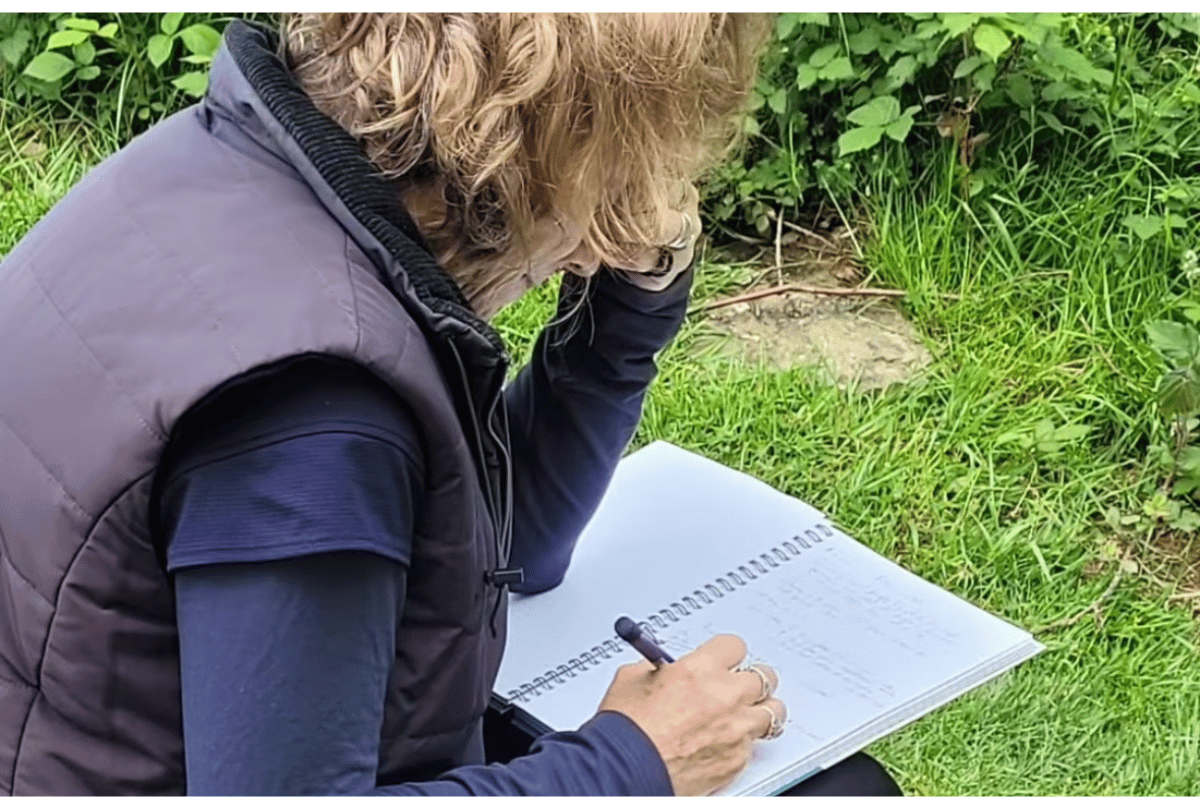
While I don’t necessarily phrase it this way, going at The Bitch has inadvertently become my life’s work. I didn’t set out with this goal in mind, but all of my work with writers kept bringing me back to this over and over, so last year I co-founded a creative writing studio with a colleague to help writers specifically with issues of confidence, perfectionism, risk taking—going at The Bitch head-on.
Our work as coaches and editors at KindWrite Studio is built around a unifying principle: writers leave our sessions feeling encouraged, inspired and motivated. When The Bitch enters the room, we find ways to help you quiet her back down.
As we provide edits and suggestions, we reassure that making mistakes is part of the process. The world will not crumble. We will still respect you in the morning, no matter how many times it takes you to nail that sentence or paragraph or chapter.
We make sure that you know that you are separate from your work. If you come to us with deeply personal material, we will never tell you it’s not important. Rather, we will show you how you can make that deeply personal material into a compelling story.
We do not believe there is an authoritative verdict about any type of truth. The only rock we stand firm on is that if you want your writing to resonate for readers, it must eventually move beyond self-expression. An infinite number of possibilities of what that form may look like exist. It’s our job to help you find your way to that form, not tell you what it should be.
We also create community so that you know you’ve got friends and colleagues around you. We want all of “our” writers to feel included, no matter what stage you’re at with your writing. At our retreats — in the Basque Pyrenees, Maryland’s Catoctin Mountains, the Pocono foothills – everyone has a voice. Everyone gets to share their work, tell their story.
When The Bitch says you don’t belong, or you’re not good enough, we make it clear that she’s got no place in the room.
Because we know that if you keep at it, despite what Elton John had to say it, maybe some day The Bitch won’t be back.
* (With thanks to Rhonda’s Z’s friend who coined this phrase and Rhonda to who shared it with us at a ZigBone Farm Winter Creative Writing Retreat).
Amen amen amen. I share your somatic response to critique. And living through a surprise critique attack would have put me under. This applies not just to my writing but to my professional life as well - there has never been anything more stressful to me than performance reviews. I have tried to figure out where it comes from to no avail. What I do know is that as I get older, I have a (slightly) easier time keeping the bitches out of the room when I'm being given constructive feedback, especially with my writing. I appreciate how much time and care you put into your retreats, helping all of us become better writers and more thoughtful supports to other writers. And someday I will call upon your skill and techniques when I host my own retreat!!